
About Sentra
Sentra is an early-stage AI company building a knowledge intelligence platform - using generative AI to digest unstructured data and surface personalized, actionable insights for enterprise teams. Their product targets large accounts, with a pricing model built around seats and custom use cases. Like many early-stage B2B SaaS startups, they needed to move fast from spreadsheets to a proper CRM setup before commercial traction outgrew their informal system.
The Challenge
Sentra was at a critical moment: early commercial traction, a small GTM team, and no structured CRM in place. Outbound was tracked in Google Sheets, deal history lived across email threads, and there was no shared visibility on pipeline or account status.
Specific problems:
No CRM setup: The team had a default Attio account with nothing configured - no data model, no pipeline, no views. Getting Attio properly set up for a startup sales team required starting from scratch.
Data in spreadsheets: Historical outbound data (contacts, accounts, deal stages) was spread across Google Sheets with inconsistent structure. Migrating this data cleanly into Attio without losing context was a core requirement.
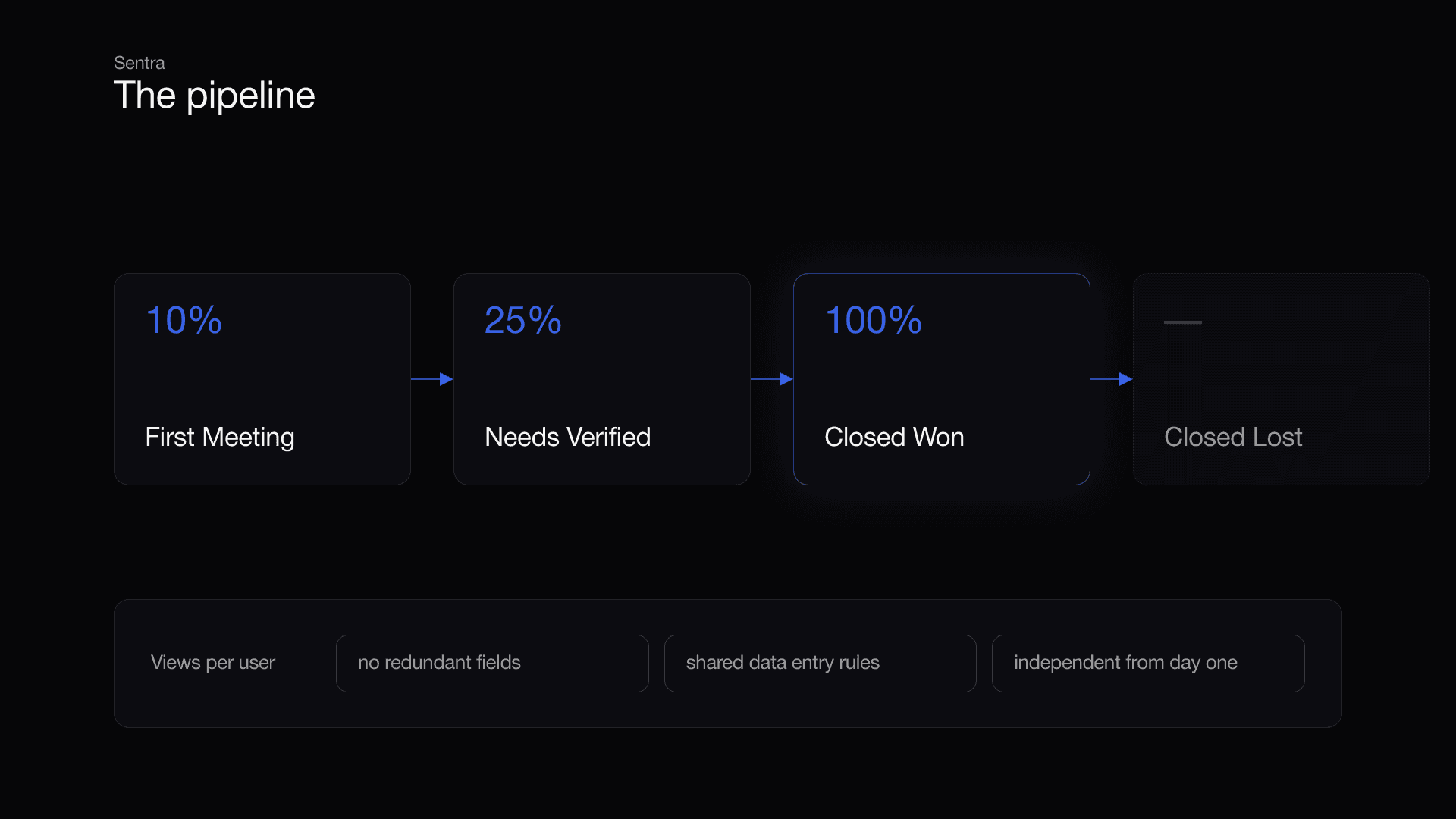
Early sales process, undefined stages: No standardized funnel. The team was tracking First Meeting (10%), Needs Verified (25%), Closed Won (100%) in a spreadsheet - this needed to become a proper CRM pipeline.
Three users, no shared process: The GTM team had no consistent data entry behavior or shared views - a common challenge when setting up a CRM for a small B2B sales team for the first time.
Our Approach
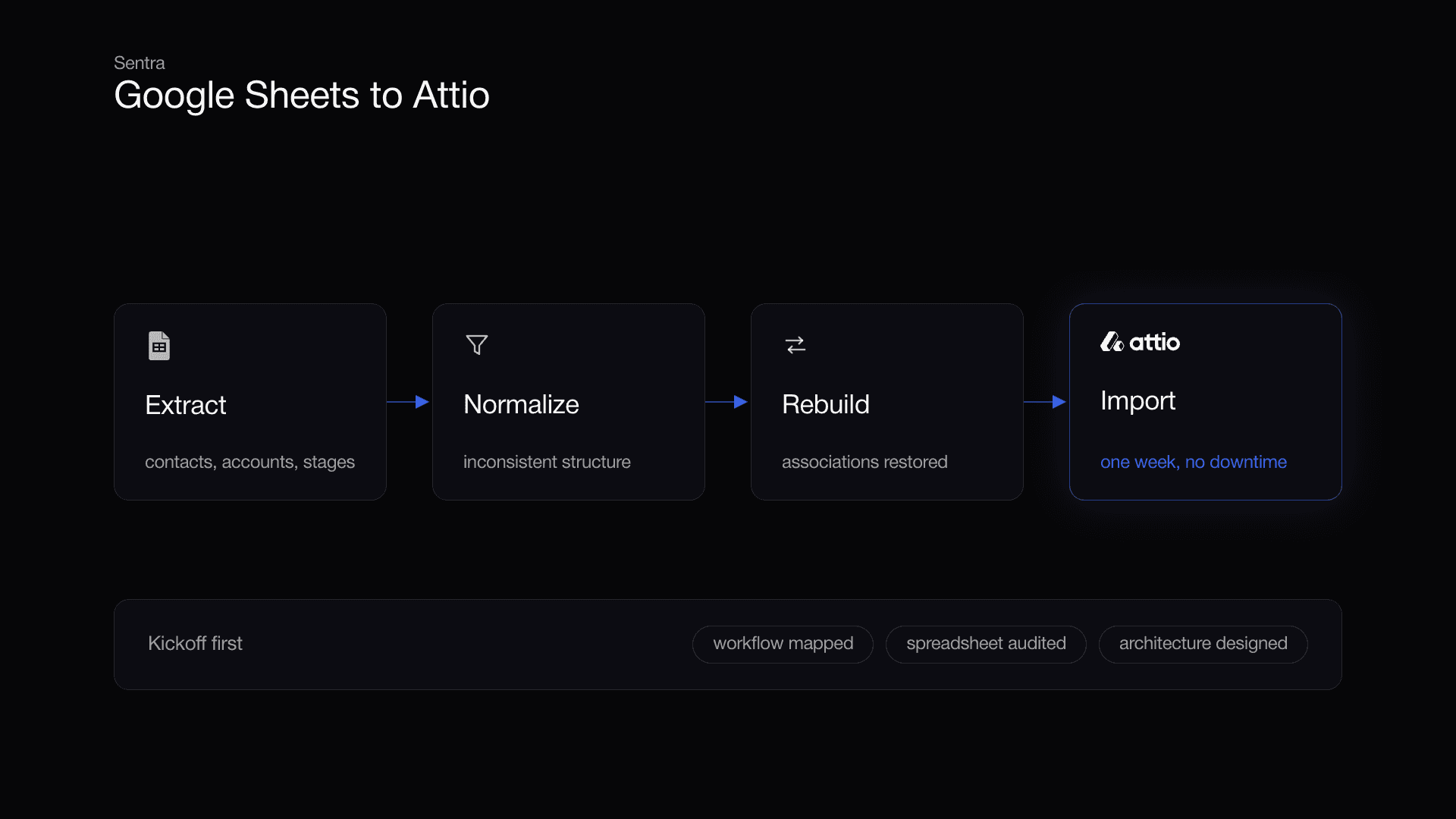
Novlini ran a kickoff session with the Sentra GTM team to map the sales workflow, audit the spreadsheet data, and design the target CRM architecture before touching anything - the right starting point for any Attio implementation from scratch.
Data Model Design
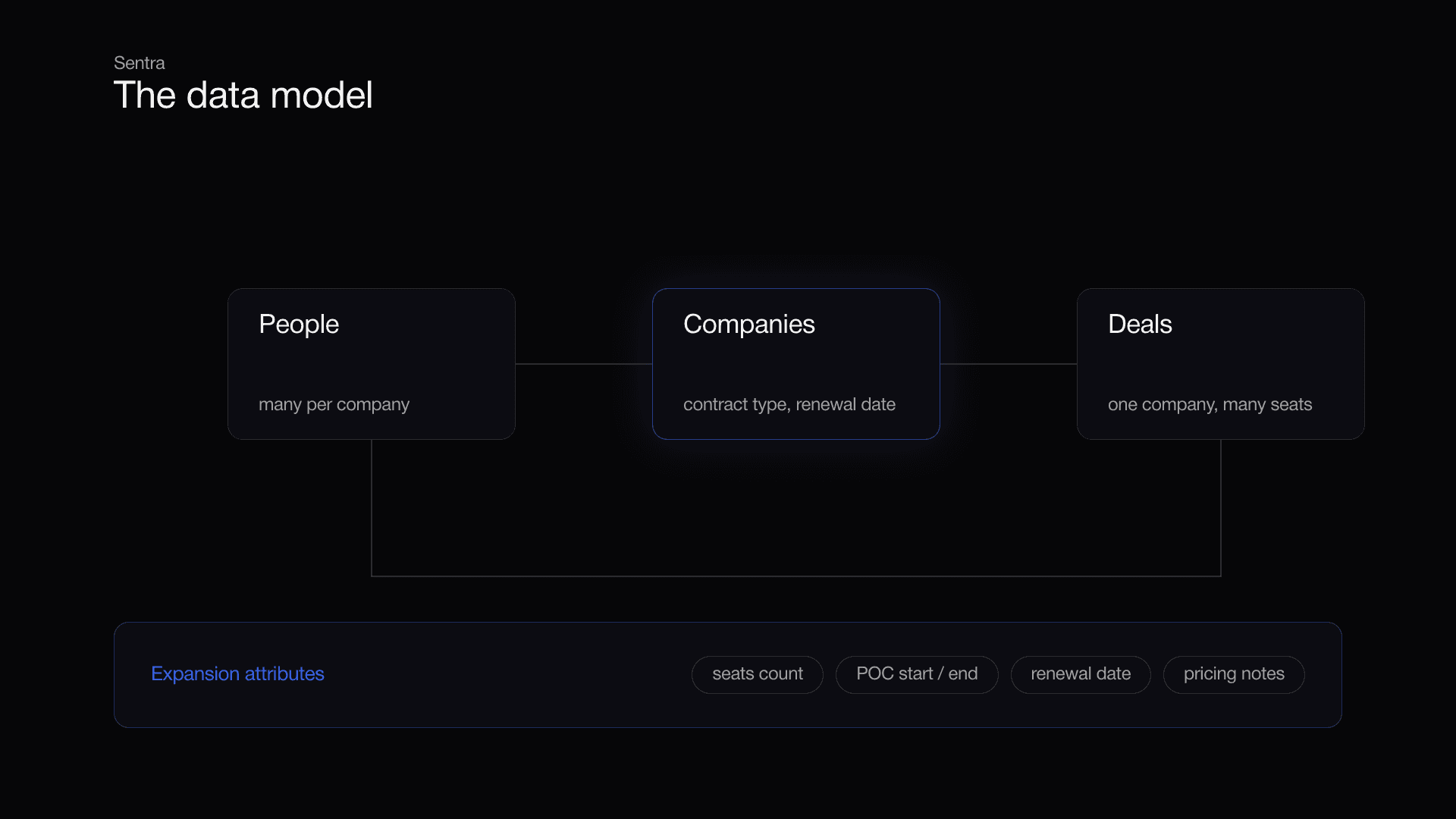
Three core objects configured in Attio: People, Companies, and Deals. Relationships defined: one company → multiple people; one deal → one company and multiple people (seats). Custom attributes added to Companies and Deals to track POC start and end dates, contract type, seats count, renewal dates, and pricing notes - giving the team the foundation for expansion and upsell tracking as the book of business grows.
Google Sheets to Attio Migration
Historical data extracted from Google Sheets, cleaned, and imported into Attio. Company and contact records normalized, associations rebuilt. Deal stages mapped to Attio's pipeline model: First Meeting, Needs Verified, Closed Won, Closed Lost. A clean migration from spreadsheets to a structured CRM pipeline, completed without disrupting the ongoing commercial motion.
Views and Team Enablement
Views and dashboards configured for the full team, with clarity on what each person should see and update. Enablement session delivered to ensure the team could operate the CRM independently from day one - no dependency on ongoing support for daily use.
Technology Stack
Attio — CRM, pipeline tracking, account management
The Results
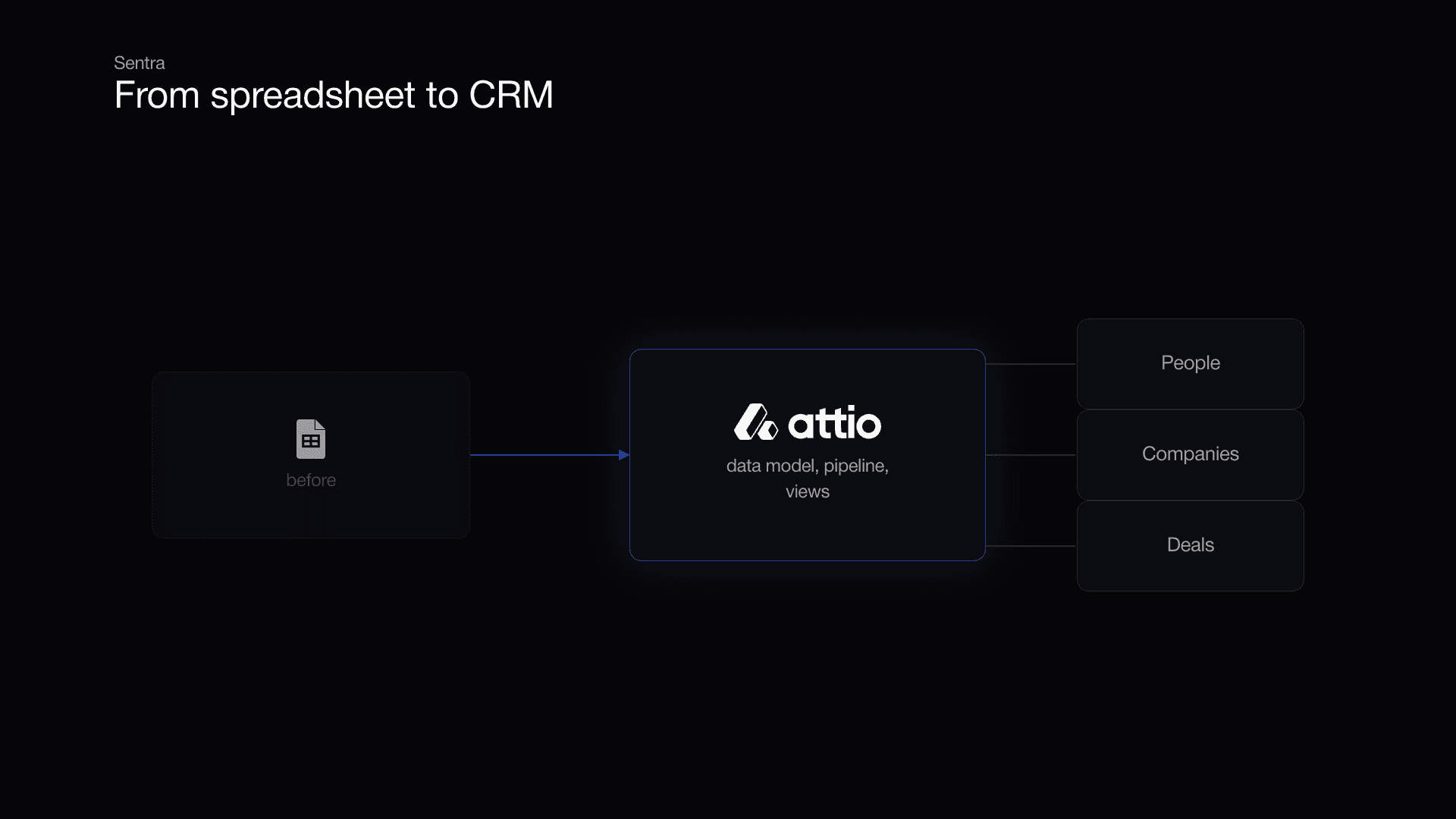
Sentra went from a blank Attio account and a Google Sheet to a CRM with clean historical data and a pipeline the team actually uses - without slowing down the commercial motion in the process.
Historical pipeline no longer buried in spreadsheets - contacts and deals from Google Sheets imported, structured, and searchable in Attio
Expansion tracking now possible - product usage fields (seats, contract type, renewal dates) in place so upsell signals are visible before renewal conversations
Three-person team aligned - each user has the views they need, no redundant fields, no friction on data entry
PLG foundation in place - data model designed to accommodate future self-serve seat expansion without rebuilding
Why It Matters
Early-stage GTM teams often treat CRM setup as a future problem - something to deal with once they have more deals. By the time they get there, months of relationship history and context are lost in inboxes and spreadsheets. Getting a clean, lightweight Attio CRM in place early doesn't slow the team down. It makes everything that comes after - outbound campaigns, pipeline forecasting, expansion tracking, upsell identification - dramatically easier to build on a solid foundation.