
About Ashcombe
Ashcombe is a London-based independent corporate finance advisory firm founded in 2010, specialising in M&A, capital raising, and strategic development for entrepreneurs, mid-market corporations, and institutional investors. With over a decade of relationship-driven deal-making, Ashcombe manages long-standing connections across hundreds of companies and investors - relationships that often span years before a transaction materialises.
The Challenge
Ashcombe's institutional knowledge lived in Excel workbooks accumulated over many years: meeting notes, financial snapshots, team contacts, and relationship context across hundreds of companies and investors.
This system had worked for a long time, but its limits were becoming clear. Searching across 3,500 tabs is not searchable. Collaboration is difficult when the data lives in files. And onboarding someone new to a relationship means handing them a spreadsheet and asking them to read.
The objective was not to build a sales machine. Ashcombe does not run outbound campaigns or manage pipeline stages. The goal was simpler and harder: take years of relationship history out of Excel and make it accessible, collaborative, and sustainable in Attio - without losing a single note.
The complexity was in the data itself. The spreadsheets were semi-structured: most tabs followed a common format, but edge cases were everywhere. Meeting notes mixed with financial data, screenshots embedded in cells, dates missing or inconsistent, headings in some columns but not others, the same company appearing across multiple tabs under different names. No migration tool could handle this cleanly.
Our Approach
Novlini delivered the migration across four phases, with weekly iteration cycles and validation checkpoints throughout.
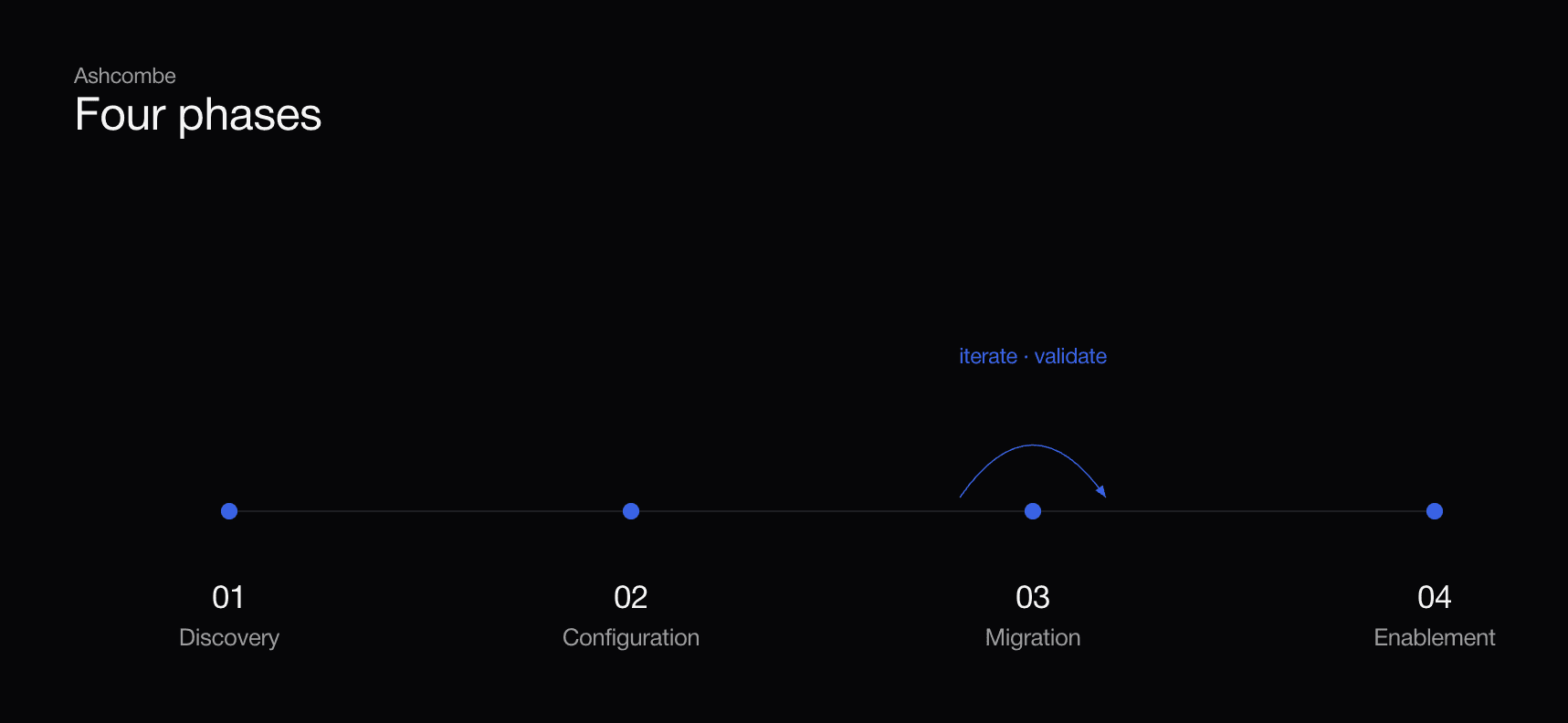
Phase 1 - Discovery and Migration Blueprint
A full audit of both workbooks before writing a single line of migration logic. Standard structures identified, edge cases catalogued, entities flagged for consolidation. The target Attio data model was defined and validated against the source data before any migration began.
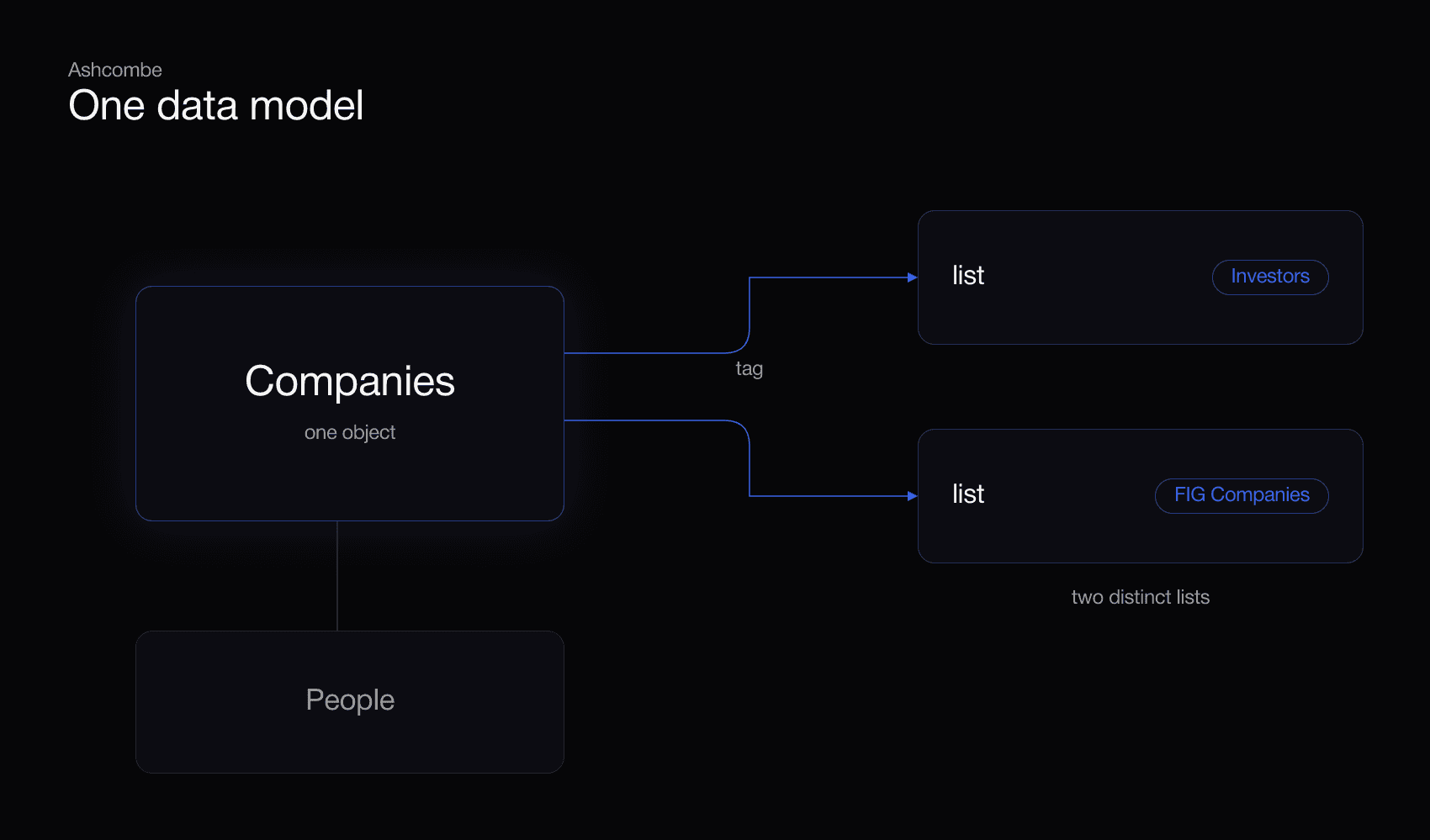
Key data model decisions: Companies and Investors as the two primary objects, with People linked to both. Sector and subsector segmentation mapped from the spreadsheet structure. A reference link to the original archived spreadsheet tab embedded on each Attio record, giving the team permanent access to the source context - including any screenshots or financial models that could not be migrated directly.
Phase 2 - Attio Workspace Configuration
Attio workspace built and configured: objects, attributes, views, and segmentation. Core navigation tested and validated before migration data started flowing in.
Phase 3 - Historical Data Migration
The most technically demanding part of the project. Notes from 3,500 tabs were parsed, cleaned, and migrated into Attio with chronological ordering preserved. The migration handled a range of structural inconsistencies: undated overview notes (positioned as the first note per record), column-based headings converted to Markdown structure, multi-cell paragraphs reconstructed correctly, date validation to flag and handle entries with inconsistent chronology.
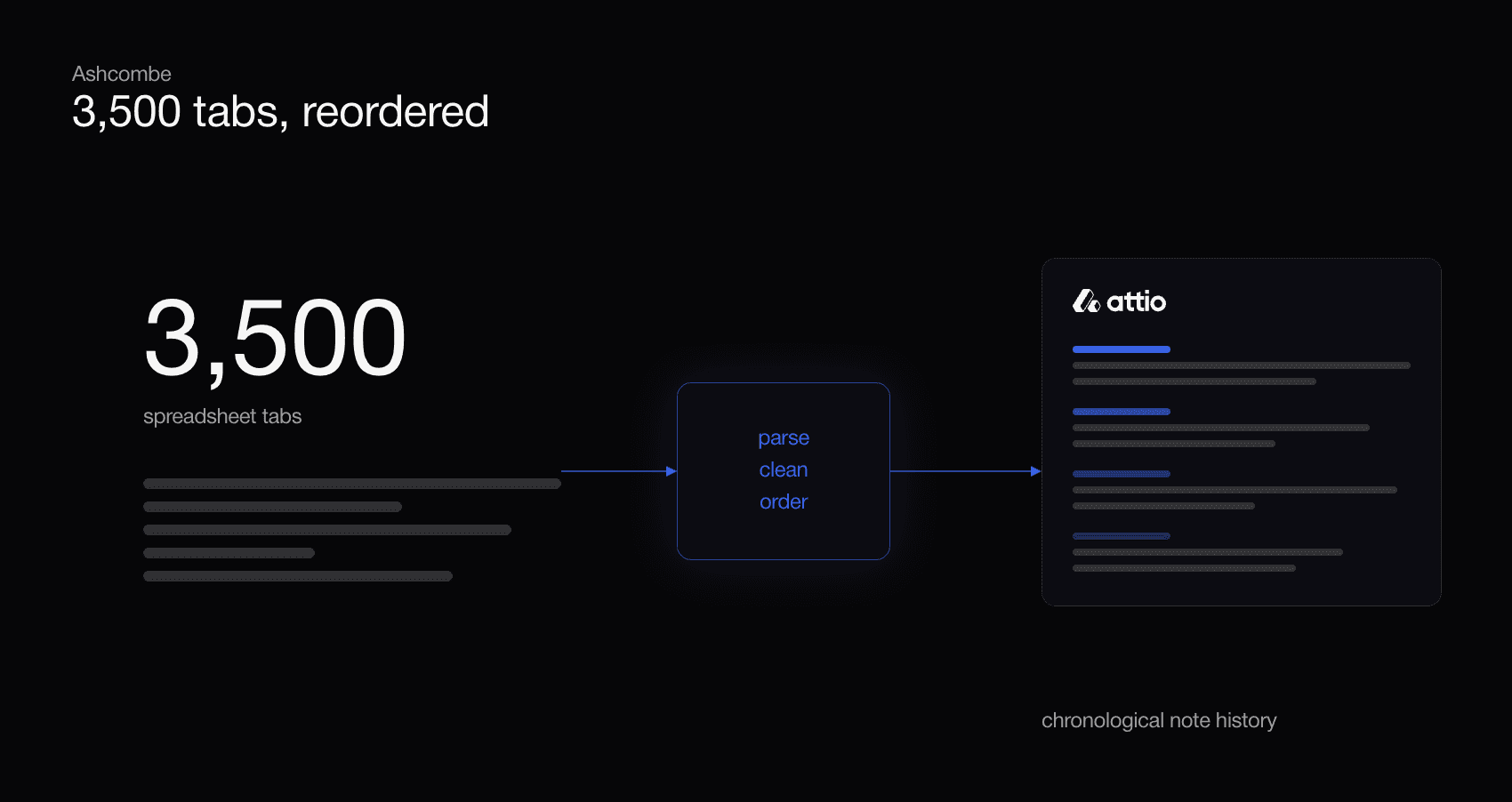
Beyond text content, screenshots and images embedded directly in Excel cells were also extracted and imported - preserving visual context that would otherwise have been lost in a standard migration.
The migration logic was built iteratively: a first batch was migrated, reviewed with the Ashcombe team, feedback incorporated, and the process re-run before scaling to the full dataset.
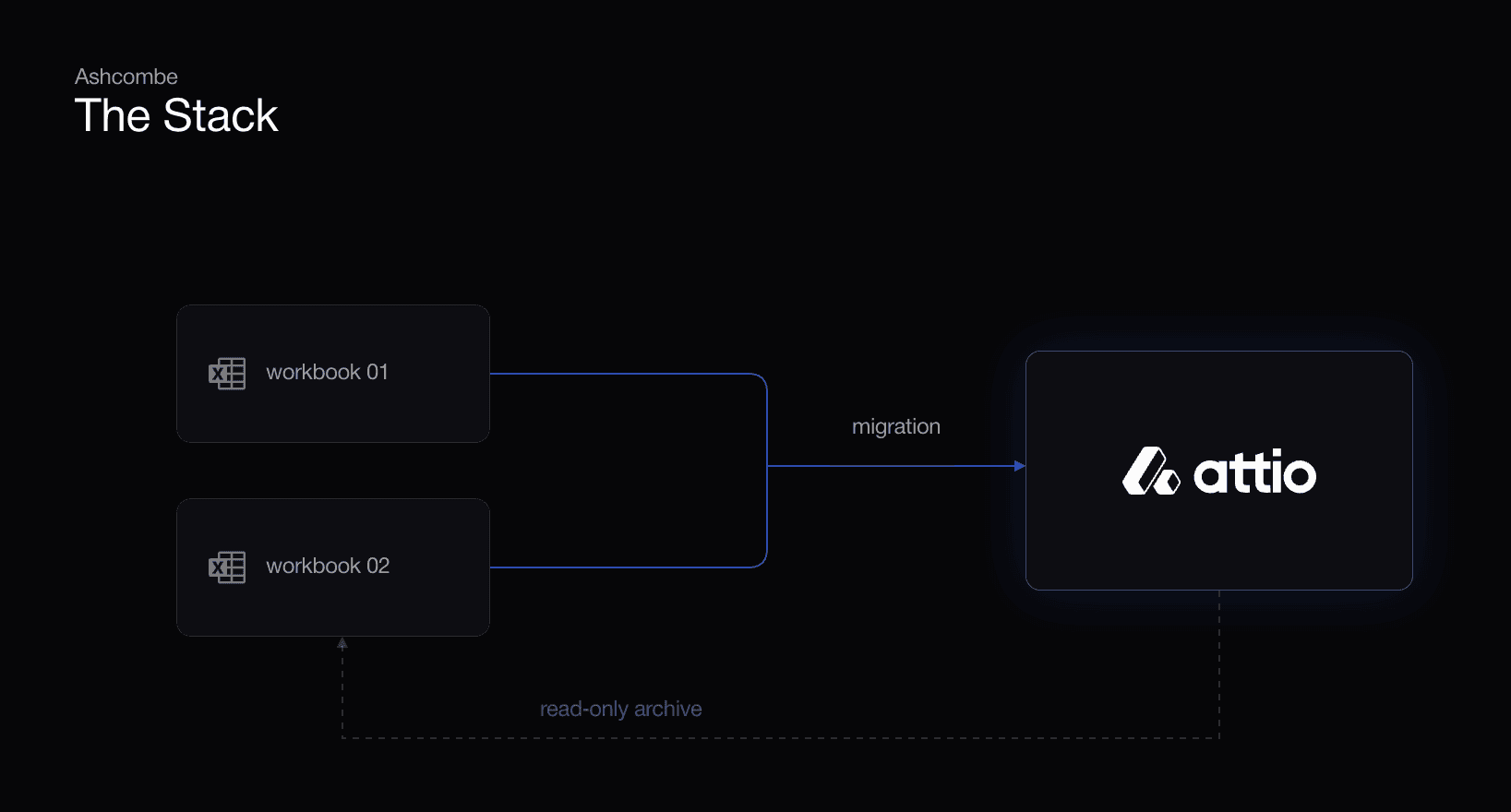
The original workbooks were preserved as a read-only archival reference, with each Attio record linking back to its source tab.
Phase 4 - Enablement and Handover
Team enablement covering note-taking conventions, tagging and segmentation, search, and navigation. Operating conventions defined. Spot QA and cleanup of edge cases identified during final validation.
Technology Stack
Attio - unified relationship management system (replaces two Excel workbooks)
The Results
Years of relationship history accessible - in a system the whole team can search, navigate, and update
Hundreds of entities migrated - companies and investors, each with full note history preserved
Chronological integrity maintained - meeting notes ordered correctly across 15 years of history
Archival reference preserved - each record links back to its source spreadsheet tab
Team enabled - operating conventions and workflows defined for day-to-day use
Spreadsheet dependency eliminated for day-to-day relationship management
Why It Matters
For advisory firms, the CRM is not a sales tool. It is the institutional memory of the firm. Every note from a meeting years ago, every contact at a company that just came back to market, every investor who passed last time but might be right this time - that context has value only if it is findable.
Migrating years of unstructured history out of Excel and into a system that works is not a data problem. It is an engineering problem wrapped in a relationship problem. Getting it right requires understanding both.